Table of Contents
- Understanding Stem Cells
- What Is Stem Cell Banking?
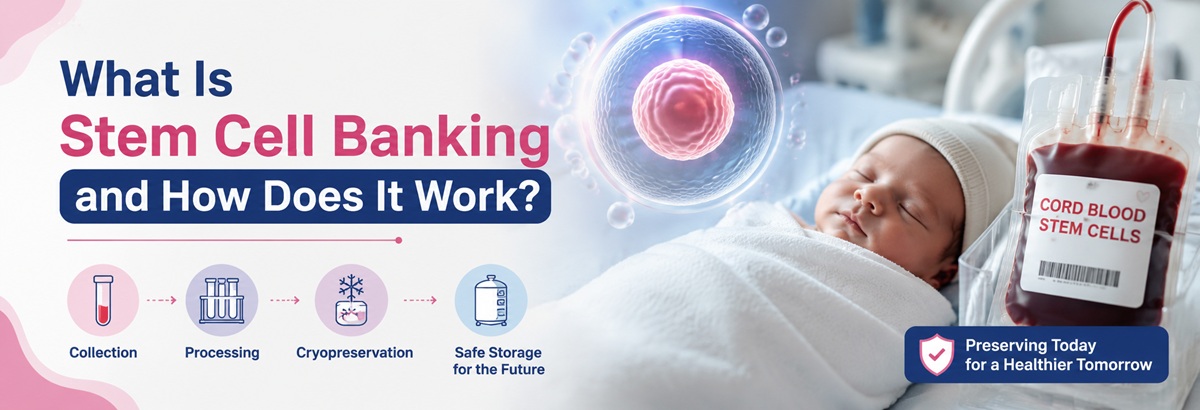
- How Does Stem Cell Banking Work?
- Step 1: Enrolment During Pregnancy
- Step 2: Collection After Childbirth
- Step 3: Transportation to the Laboratory
- Step 4: Cryopreservation
- Why Are Stem Cells Important?
- Cord Blood Banking vs Cord Tissue Banking
- Diseases Stem Cells Currently Treat
- Future of Stem Cell Therapy
- Benefits of Stem Cell Banking
- Limitations Parents Should Know
- Stem Cell Banking Cost in India
- Is Stem Cell Banking Worth It?
- Final Thoughts
The journey into parenthood brings excitement, responsibility, and countless important decisions. Parents carefully choose doctors, plan healthy pregnancies, and look for ways to secure their baby’s future. As a result, stem cell banking has become a major topic among expecting families in recent years.

Today, many doctors, hospitals, and pregnancy experts discuss cord blood banking and newborn stem cell preservation. Some parents consider it a future medical safeguard, while others view it as a long-term healthcare investment.
So, what exactly is stem cell banking? More importantly, how does it work, and why are more families considering it today? Let’s break it down in simple words.
Understanding Stem Cells
Stem cells are unique cells in the human body because they can transform into different types of cells. In addition, they can renew themselves and support tissue repair inside the body.
For this reason, scientists often call stem cells the body’s “master cells.” These cells can develop into:
- blood cells
- immune cells
- nerve cells
- bone cells
- muscle cells
Because of their regenerative abilities, stem cells now play a major role in modern medical research. Moreover, researchers continue to explore new ways to use stem cells in healthcare and regenerative medicine.
According to the Mayo Clinic, doctors already use stem cells to treat several blood disorders, immune diseases, and cancers.
What Is Stem Cell Banking?
Stem cell banking refers to collecting and storing stem cells from a newborn baby’s umbilical cord after birth. After delivery, a small amount of blood remains inside the umbilical cord and placenta. Earlier, hospitals discarded this blood as medical waste. However, researchers later discovered that cord blood contains powerful stem cells.
As a result, medical experts now collect, process, test, and preserve these stem cells for potential future medical use. Most stem cell banks preserve:
- cord blood stem cells
- cord tissue stem cells
- placental tissue stem cells
Most importantly, the collection process remains completely safe and painless for both mother and baby.
How Does Stem Cell Banking Work?
Many parents assume stem cell collection involves a complex medical procedure. However, the process remains simple, quick, and safe.
Step 1: Enrolment During Pregnancy
First, parents register with a stem cell banking company during pregnancy. After registration, the company provides a sterile collection kit for the hospital.

Step 2: Collection After Childbirth
Once the baby arrives and the doctors clamp the umbilical cord, they collect the remaining blood from the cord. The procedure:
- takes only a few minutes
- does not affect the delivery process
- remains painless for both mother and baby
This cord blood contains hematopoietic stem cells, which doctors widely use in medical treatments today.
Step 3: Transportation to the Laboratory
Next, specialists transport the collected sample to a stem cell laboratory under controlled temperature conditions. At the laboratory, experts check:
- stem cell count
- cell viability
- contamination
- infections
After testing, specialists preserve only healthy and viable samples for long-term storage.
Step 4: Cryopreservation
After processing, laboratory experts store the stem cells inside liquid nitrogen tanks at extremely low temperatures, -196 C.
At this temperature, stem cells can remain preserved for decades. In fact, research published by the National Institutes of Health (NIH) found that cord blood stem cells stored for more than 20 years remained viable and functional.
Why Are Stem Cells Important?
Stem cells play an important role in regenerative medicine because they may help repair damaged tissues and rebuild the immune system. Currently, doctors use stem cells to treat more than 80 diseases, including:
- leukemia
- lymphoma
- thalassemia
- sickle cell anaemia
- aplastic anemia
- immune disorders
Furthermore, researchers continue to study stem cells for future medical applications.
Cord Blood Banking vs Cord Tissue Banking
Many parents feel confused about the difference between cord blood banking and cord tissue banking. Although both methods involve stem cell preservation, they store different types of stem cells.
| Feature | Cord Blood Banking | Cord Tissue Banking |
|---|---|---|
| Main Stem Cells | Hematopoietic Stem Cells | Mesenchymal Stem Cells |
| Current Use | Blood disorders | Regenerative medicine research |
| Source | Umbilical cord blood | Umbilical cord tissue |
Currently, doctors use cord blood stem cells in approved treatments, while researchers continue studying cord tissue stem cells for future regenerative therapies.
Diseases Stem Cells Currently Treat
Today, stem cells already help patients worldwide through stem cell transplants and regenerative treatments.
Blood Disorders
Blood Cancers
Immune Disorders
- Severe Combined Immunodeficiency (SCID)
Metabolic Disorders
- Hurler Syndrome
- Krabbe Disease
As research progresses, doctors may discover even more medical applications for stem cells in the future.
Future of Stem Cell Therapy
Stem cell banking continues to gain popularity because stem cell research is advancing rapidly worldwide. Currently, scientists are studying stem cell therapies for:
- autism
- cerebral palsy
- Type 1 diabetes
- Parkinson’s disease
- spinal cord injuries
- heart disease
Additionally, researchers at the Harvard Stem Cell Institute describe regenerative medicine as one of the most promising areas of future healthcare.
Although many treatments still remain under clinical research, medical advancements continue expanding the possibilities of stem cell therapy.
Benefits of Stem Cell Banking
- Safe Collection Process: Doctors collect cord blood safely and painlessly after childbirth.
- Potential Future Medical Use: Stored stem cells may support future medical treatments and regenerative therapies.
- Better Family Matching: In some cases, siblings may benefit from stem cell compatibility.
- Immediate Availability: Unlike donor searches, stored stem cells remain readily accessible whenever needed.
- Lower Risk of Rejection: Cord blood stem cells may carry a lower risk of immune rejection compared to bone marrow transplants.

Limitations Parents Should Know
While stem cell banking offers promising benefits, parents should also understand its limitations.
- Stem cells cannot currently treat every disease
- Many therapies still remain experimental
- Private stem cell banking can become expensive
- Families may never actually use the stored stem cells
Therefore, parents should evaluate both the benefits and limitations carefully before making a decision.
The American Academy of Paediatrics also encourages parents to make informed choices after understanding realistic expectations.
Stem Cell Banking Cost in India
The cost of stem cell banking in India depends on several factors, including:
- storage duration
- laboratory certifications
- company reputation
- type of stem cell preservation
Additionally, many stem cell banks now offer EMI and instalment payment options for parents. Check our price plan here.
Is Stem Cell Banking Worth It?
There is no universal answer to this question because every family has different priorities and financial considerations. For some parents, stem cell banking provides peace of mind and future medical possibilities. Meanwhile, others may not feel comfortable with the financial investment.
Families with a history of:
- blood disorders
- genetic conditions
- immune diseases
May especially benefit from discussing stem cell preservation with their doctor. Ultimately, stem cell banking remains a personal decision based on medical awareness, healthcare priorities, and financial comfort.

Final Thoughts
Stem cell banking has become one of the most discussed advancements in preventive healthcare and regenerative medicine. Although stem cells do not guarantee future cures, they may provide valuable medical possibilities as research and healthcare technologies continue evolving.
As regenerative medicine grows, stem cell preservation may become even more valuable in the future. Most importantly, understanding stem cell banking helps parents make informed and confident decisions for their family’s future healthcare journey.