
Table of Contents
- Why Do Stem Cell Banking Company in India Matter in the First Place?
- What Parents Should Actually Check Before Choosing
- Why Parents Trust Cordlife India
- Safety of the Stored Cord Blood Sample Matters
- Understanding the Cord Blood Banking Process
- Is Stem Cell Banking Worth It in India?
- What About Success Rates?
- Affordable Plans Matter Too
- Other Stem Cell Banking Company in India
- Red Flags Families Shouldn’t Ignore
- Conclusion
For many parents, pregnancy comes with a long list of decisions. Some are simple. Some feel huge. And when the topic of stem cell banking companies in India comes up, it’s natural to feel overwhelmed by medical terms and endless information.
That’s where many families pause. As parents, what truly matters is a stem cell banking company’s reassurance, transparency, and trust. You want to feel confident that your baby’s stem cells will be stored safely and cared for properly for years to come, if they are ever needed. That’s why choosing the best stem cell banking company in India warrants closer scrutiny.
Why Do Stem Cell Banking Company in India Matter in the First Place?
Stem cells are often known as the body’s natural repair cells. They can self-renew and develop into different types of cells and are already being used in treatments for several blood disorders, immune conditions, and certain cancers.
Cord blood collected right after birth contains these powerful stem cells. Once the umbilical cord is discarded, these stem cells cannot be collected again.
That’s why many families choose stem cell preservation for newborns as a step toward future healthcare preparedness.
With growing awareness about future treatment possibilities, interest in stem cell storage in India has increased significantly over the last few years.
What Parents Should Actually Check Before Choosing
A lot of families focus only on price. That’s understandable. But cost alone shouldn’t drive this decision.
A cheaper storage plan won’t mean much if the facility lacks proper accreditations or reliable processing systems. Before selecting a stem cell bank, parents should look at:
- Storage technology and cryopreservation standards
- International accreditations
- Years of experience
- Sample release history
- Lab transparency
- Emergency backup systems
- Customer support quality
- Retrieval process and timelines
- Long-term financial stability of the company
Why Parents Trust Cordlife India
Among the top stem cell banks in India, Cordlife India continues to stand out for a few strong reasons.
The company has been operating for over 24 years as part of the larger Cordlife Group across Asia. In stem cell banking, experience matters. This isn’t a short-term service — families may rely on the stored stem cells many years or even decades later.
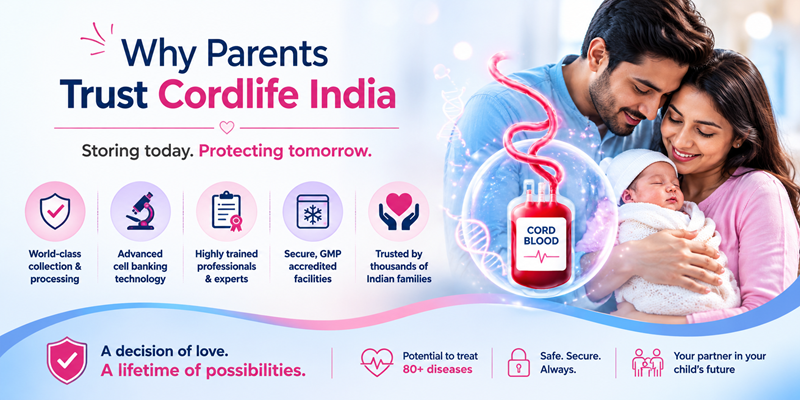
Cordlife currently serves more than 600,000 parents across Asian markets including India, Singapore, Hong Kong, Indonesia, Malaysia, Vietnam, and the Philippines. That large network gives many parents added confidence. Their Indian processing and storage facility carries:
- AABB accreditation
- CAP accreditation
- NABL accreditation
That triple accreditation setup is a major factor for families comparing stem cell storage reliability and accreditation in India.
Safety of the Stored Cord Blood Sample Matters
When parents ask, “Which stem cell bank is safest in India,” they’re usually talking about three things:
- Proper sample handling
- Long-term storage reliability
- Chances of successful retrieval later
Cordlife puts strong emphasis on all three.
The company also highlights proven clinical usage. As a group, Cordlife has reportedly released more than 76 cord blood units to healthcare institutions across 10 countries.
Understanding the Cord Blood Banking Process
Many first-time parents worry the collection process might affect delivery. It doesn’t. The cord blood banking process is absolutely safe, quick, and painless for both mother and baby.
Here’s how it usually works:
- After birth, the umbilical cord is clamped and cut
- Blood remaining in the cord is collected
- The sample is packed in a sterile cord blood collection kit box
- It’s transported to the lab under controlled conditions
- Stem cells are processed and cryopreserved for long-term storage
The collection usually takes only a few minutes.
Is Stem Cell Banking Worth It in India?
The honest answer depends on how families view future healthcare planning. Some people feel the chances of needing stored stem cells are low. Others prefer securing every possible medical option early while they still can.

What’s changing the conversation is the growth of regenerative medicine and ongoing research around stem cell therapy in India. Researchers worldwide continue exploring how stem cells may help repair damaged tissues and support treatment development for additional conditions in the future. That growing clinical interest is one reason many urban Indian families now seriously consider banking.
What About Success Rates?
Parents also search for the best stem cell banking company in India with the highest success rate and want to understand the actual usage potential.
Here’s where caution matters.
Research says that no ethical stem cell bank should promise miracle cures or guaranteed outcomes. What parents should look for instead is:
- Successful release history
- Proper preservation methods
- Clinical partnerships
- Regulatory compliance
- Strong processing standards
That’s a more realistic way to evaluate stem cell banking success rate claims. For example, Cordlife often stands out because of its proven stem cell transplant record and long operational history.
Affordable Plans Matter Too
The cord blood banking cost in India varies depending on:
- Storage duration
- Cord blood only vs combined tissue storage
- Testing included
- EMI options
- Promotional plans
Many parents now look specifically for affordable stem cell banking plans in India without compromising safety, and that balance is important.

A low-cost plan sounds great initially, but if processing quality suffers, families may regret the decision years later.
Other Stem Cell Banking Company in India
While Cordlife receives strong attention, several other providers also operate in the Indian market. Some known names include:
- LifeCell International
- CryoViva Biotech
- Reliance Life Sciences
- StemCyte India
- Cryo StemCell
Red Flags Families Shouldn’t Ignore
Some warning signs deserve attention immediately. Parents should think twice if a Stem Cell Bank:
- Avoids discussing accreditations
- Makes unrealistic medical promises
- Has unclear pricing
- Doesn’t explain retrieval policies
- Lacks transparent processing details
- Offers unusually cheap packages without explanation
When it comes to stem cell storage safety in India, transparency becomes essential.

Conclusion
Choosing the right stem cell banking company in India goes far beyond cost alone — it’s about trust, safety, and long-term reliability. Parents require a company with strong scientific standards, proven infrastructure, reliable storage systems, and real-world experience handling stem cells over the long haul.
That’s one reason Cordlife India continues to receive attention from many expecting families. Its international presence, national and international accreditations, long-standing experience, and focus on transparency help give parents something that matters deeply during pregnancy — reassurance. And when it comes to protecting a child’s future healthcare options, that reassurance can mean everything.