Table of Contents
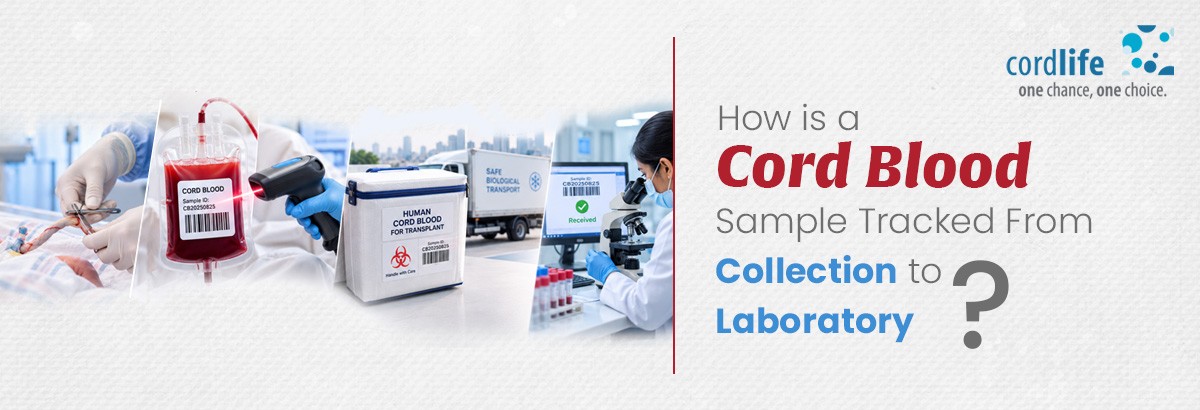
Modern parents understand that saving the baby’s cord blood is one of the best ways to offer the gift of lifelong protection. However, it often comes with its fair share of doubt, particularly about how safely precious stem cells are transported from the delivery room to the laboratory. In this article. Let’s decode the cord blood chain of custody to understand how the entire process of moving cord blood stem cells is carefully managed. Sterile techniques and a consistent chain of custody contribute to a carefully coordinated process of cord blood transportation.
Pre-Birth Preparation
The journey of tracking starts while the mother is still in her third trimester. Registration with an accredited cord blood bank comes with peace of mind. Expectant parents receive a temperature-controlled collection kit containing hospital-grade collection supplies.
Each kit has its own Master Barcode or UID. These identifiers are linked to the unborn baby and the expectant mother’s medical profile in the bank’s Laboratory Information System (LIMS). Thus streamlining cord blood bank sample tracking from the beginning.
Cord Blood Collection
Collection begins immediately after a healthy delivery and the clamping and cutting of the umbilical cord. The process is noninvasive and risk-free for both mother and baby.
The healthcare provider uses gravity and sterile venipuncture to draw the remaining blood from the umbilical vein into the collection bag with anticoagulant. Additionally, small tubes of maternal peripheral blood are collected to screen for infectious diseases in compliance with stringent standards established by regulatory health bodies, such as the FDA and AABB.
Once completed, the clinical provider verifies parental details against the barcoded collection bag. The label clearly specifies the time of delivery, time of collection, approximate collection volume, and clinical observations. These ensure the cord blood sample identification becomes foolproof.
A call or automated digital alert to the bank’s call center indicates that a sample is ready for export!
Dedicated Medical Courier Dispatch
Leading cord blood banks rely on specialised medical logistics providers, including Category B-certified biological-material transport services, to facilitate transportation from hospitals to processing facilities.
As part of the well-defined cord blood tracking system, the courier doesn’t simply receive a package from the hospital maternity ward but checks the seals, confirms the patient UID with the dispatch manifest, and electronically confirms the date and time of transfer.
Stem Cells in Transit
The time required for covering the distance between the birthing room and the central processing facility is crucial. High-end cold chain and online tracking technology work actively to bridge this gap.
- Advanced Phase Change Materials (PCMs) and vacuum-insulated panels keep the container at a comfortable steady-state temperature (15°C-25°C).
- Many collection kits come with an onboard data logger. These smart sensors record temperature variations within the collection kit during transit.
- State-of-the-art logistics incorporate a GPS-enabled cord blood sample tracking system as part of the risk mitigation plan; they broadcast the container’s live location.
Reaching the Laboratory
Once the process of cord blood transportation to the laboratory is complete, the sample enters a secure receiving area, where cargo becomes samples, and loading docks become a rigorous scientific process of analysis.
- Tamper check: Technicians examine the outside tamper-proof seals to verify the integrity of the package from start to finish.
- Data logger analysis: A temperature data logger allows professionals to create an accurate graph of the journey. If there were any temperature violations along the way, the system identifies these violations for quality assurance review.
- Barcode exchange: Technicians scan the barcode on the outside of the container, the interior pouches, and the maternal blood vials, as well as the main cord blood bag. The LIMS instantly confirms that all elements match the profile shared by parents before delivery.
Processing and Volume Reduction
The sample processed in the sanitised room goes through volume reduction, one of the most sensitive steps that removes excess plasma and red blood cells from the bag to concentrate the pristine stem cells.
- Barcode labels: The cord blood sample traceability is enhanced through the barcode-enabled cryogenic-resistant tags transferred directly from the pre-defined, standardised master UID.
- Sample handling: Whether the processing system is automated or manually sedimented, the barrier to transfer is verified by dual-technician confirmation or barcode-driven computer verification of samples.
- Testing and charting: Laboratory staff count the total nucleated cells (TNCs) and stem cells, check for sterility, and record maternal viral screening results in the child’s digital lab record.
Cryopreservation
When the stem cells are isolated and reduced to a concentrated form, the sample is sealed in a shatter-proof, multi-compartment container lined with a cryogenic-grade, indelible bar-coded identifier that can endure the cryogenic temperature (-196°C).
- Before long-term cryopreservation, the sample is placed onto the computer-directed controlled-rate freezer that slowly reduces the temperature (1°C/min) to avoid thermal shock and cell death.
- The container is then injected into the appropriate tank containing vapor or liquid phase nitrogen. The sample is given a permanent coordinate through LIMS.
Conclusion
Cord blood tracking involves advanced technology and the dedication of healthcare professionals. By carefully tracking each sample, they help protect the stem cells that may offer a family future treatment options.